Have a question or want to learn more about our services? Fill out the form below and our team will get back to you within 24 hours.
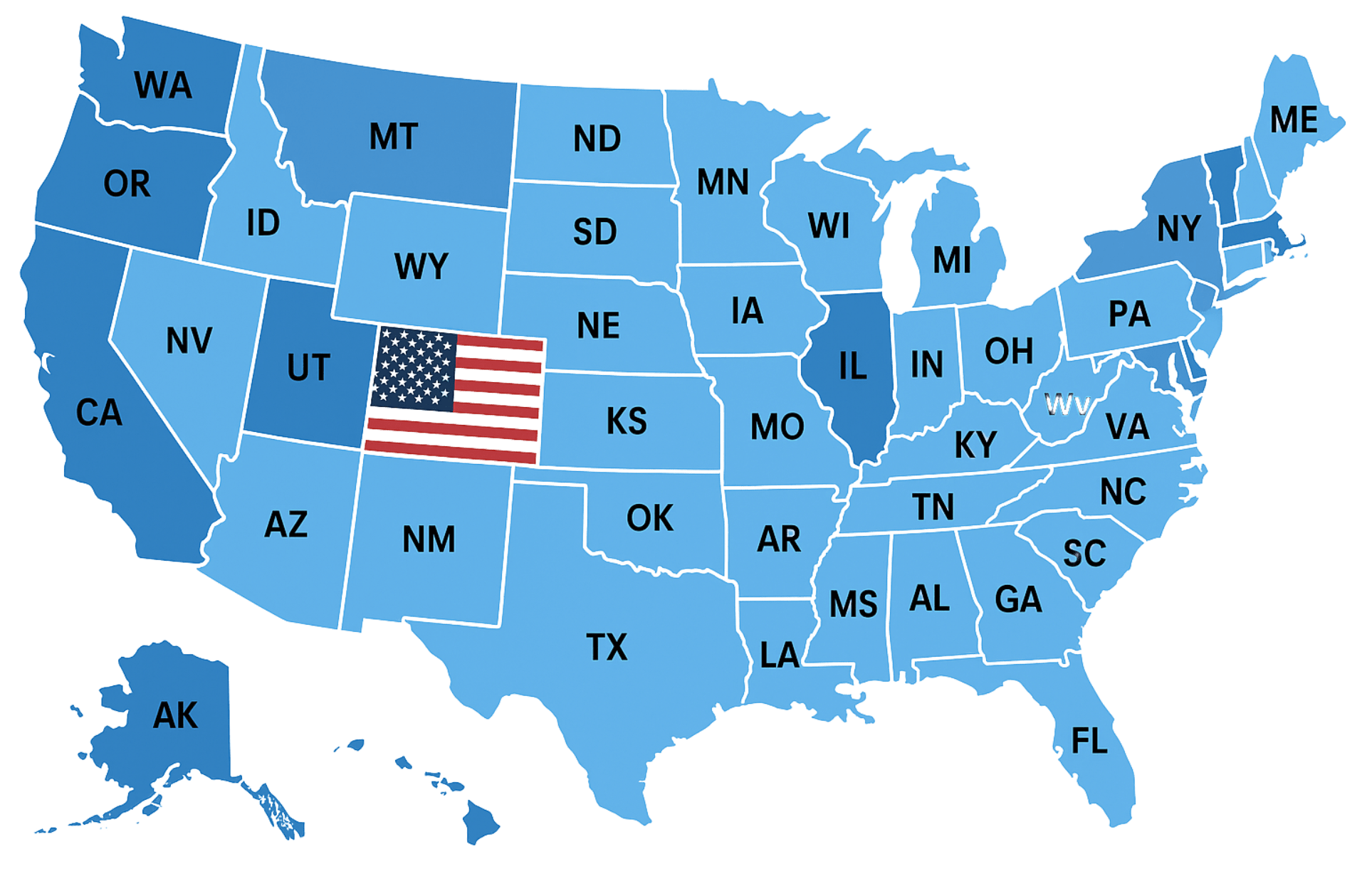
We serve all 50 states.
Browse quick, provider-friendly answers on insurance credentialing, medical billing, licensing, virtual medical assistants, and AR recovery—optimized for fast clarity and real-world next steps.
Need hands-on help? Explore our core services: Insurance Credentialing, Medical Licensing, Virtual Medical Assistants, AR Recovery, and Eligibility Verification.
Network participation, CAQH, PECOS/Medicare enrollment, timelines, and the most common credentialing requirements. For deeper guidance, see our Credentialing Buyer’s Guide.
Insurance credentialing is the process of verifying a provider’s education, license, training, and work history so they can participate with insurance payers. Start here: insurance credentialing service.
Payers require credentialing to confirm providers meet quality, safety, and compliance standards before reimbursement and network participation.
Credentialing commonly takes 60–120 business days. Medicare/PECOS and some commercial payers may take longer depending on specialty, state, and panel status.
CAQH ProView is a centralized database insurers use to collect provider information and documents during credentialing and contracting.
CAQH must be attested every 120 days (even if nothing changes) to keep your profile active for payers.
Common documents include state license, malpractice insurance, IRS 147C/EIN letter, voided check (if billing as an entity), resume/CV, and CAQH access. More may be required by specialty and payer.
In most cases, no. Seeing patients before approval often leads to denials and lost revenue. We can advise on safe options (in-network effective dates, retroactive rules, and payer-specific exceptions).
Yes. NPs typically need credentialing with payers, and some plans also require collaborating/supervising provider details. See: credentialing for nurse practitioners.
Yes. Telehealth providers must meet payer credentialing requirements and maintain proper licensure for each state where patients are located.
Credentialing with RxCredentialing starts at $140 per payer application. Pricing may vary by payer type (commercial vs government) and scope.
Yes. Physical therapists must be credentialed to receive in-network reimbursement. See: physical therapy credentialing.
Hospital privileges allow providers to admit patients or perform procedures at a hospital. Some specialties/payers require privileges; many outpatient models do not.
Medicare typically requires revalidation every five years. Details are managed through PECOS.
Not always, but some states and specialties require Medicare enrollment first. Medicaid rules also vary by state and MCO structure.
PECOS is Medicare’s online enrollment system used to submit and manage Medicare enrollment applications for providers and suppliers. Learn more: PECOS (CMS).
Yes. Railroad Medicare enrollment requires active Medicare enrollment first, then additional steps depending on your region and specialty.
Managed Care Organizations (MCOs) are insurers contracted by states to administer Medicaid benefits under specific rules and network requirements.
No. In most cases, you must enroll with state Medicaid first before contracting with Medicaid MCOs.
Reassignment allows an entity (group/clinic) to bill and receive Medicare payment for services rendered by an enrolled provider, subject to Medicare rules.
Payers typically send a welcome/approval letter via email or mail with your effective date and participation details. We track and confirm effective dates before billing begins.
An IRS 147C letter confirms your legal business name and EIN as recognized by the IRS—often required for payer contracting and EFT.
Taxonomy codes identify your provider type and specialty, used by payers and NPPES to ensure accurate credentialing and claims processing.
No. Individual providers receive one Type-1 NPI. Organizations can have a separate Type-2 NPI.
A Type-2 NPI is for organizations (LLC, PLLC, group practices, clinics) and is required to enroll the business with many payers.
Yes. Behavioral health credentialing may include additional payer documentation, supervision/collaboration rules, and specialty-specific network criteria. Related: behavioral health billing.
Often, yes. Anesthesia credentialing can involve group-based contracting, facility arrangements, and payer-specific anesthesia rules. Related: anesthesia billing services.
Yes. Some closed panels accept waitlists or exceptions, but timelines vary. We confirm panel status and next best payer options before submission.
We identify the denial reason, correct documentation/data issues, and submit an appeal or corrected application based on payer guidance.
Credentialing remains active as long as you maintain your license, insurance, CAQH, and meet payer recredentialing/revalidation requirements.
Some payers offer expedited review in limited cases. We can request faster processing when available, but approval timelines remain payer-controlled.
Claims, denials, CPT/ICD-10, EDI/ERA, telehealth and anesthesia billing basics, plus how billing ties to credentialing. Related: medical billing services.
Medical billing is the process of submitting insurance claims and collecting payments for healthcare services—from charge entry through payment posting and reconciliation.
Common causes include incorrect coding, eligibility issues, missing documentation, authorization problems, and payer-specific claim rules.
It measures the percentage of claims paid without denial on the first submission—higher first-pass rates usually mean faster cash flow.
CPT codes describe procedures and services performed during a visit and are required for clean claim submission.
ICD-10 codes represent diagnoses and medical necessity. Accurate diagnosis coding supports coverage and reduces denials.
EDI (Electronic Data Interchange) enables electronic claim submission, eligibility transactions, and other payer communications.
ERA (Electronic Remittance Advice) explains how claims were paid or denied and is used for accurate payment posting and follow-up.
Many payers pay within 15–45 days, but timing depends on claim quality, payer rules, and whether the provider is in-network.
Balance billing means charging a patient for amounts not covered by insurance. Rules vary by payer and state; compliance is important.
Yes. Telehealth billing often requires specific modifiers, place of service codes, documentation, and payer-specific rules.
Anesthesia billing is time-based and typically uses base units + time units, plus modifiers and payer-specific anesthesia policies. Related: anesthesia billing services.
Global billing refers to a single payment covering pre-, intra-, and post-procedure services within a defined global period.
Modifiers add context to a CPT code (e.g., distinct service, side, repeat) and can prevent improper denials when used correctly.
Medical necessity means documentation supports why a service is appropriate and covered. Payers rely on diagnosis, notes, and policy rules.
A superbill is a detailed receipt used for out-of-network billing or patient reimbursement submissions.
Denied claims are corrected and resubmitted, or appealed with supporting documentation until resolved whenever allowable.
It’s the amount a patient owes after insurance processes the claim (copay, coinsurance, deductible, or non-covered amounts).
Charge posting is entering billable services into your billing system so claims can be generated and submitted.
Payment posting is recording payer and patient payments and reconciling them against billed charges and remittance details.
Compliance means following payer rules, CMS guidelines, HIPAA requirements, and documentation standards to reduce audits and denials.
Yes, including traditional Medicare/Medicaid and managed plans, based on your payer mix and state rules.
Yes. Outsourcing can reduce overhead, improve claim accuracy, and speed up payments—especially when paired with strong AR follow-up.
Credentialing gets you in-network and contracted; billing submits claims and manages reimbursement after services are provided.
Audits review coding accuracy, documentation, medical necessity, and compliance. Maintaining clean records and accurate claims helps minimize risk.
RCM covers the full payment lifecycle—from registration and eligibility through claim submission, payment posting, denial management, and patient collections.
State licensing, DEA, CLIA, renewals, and multi-state practice planning. Related: medical licensing services.
Licensing grants legal authority to practice in a specific state and is required before credentialing and billing can be fully activated.
Yes—providers generally must be licensed in each state where patients are located, including telehealth care delivery.
A DEA number is issued by the U.S. Drug Enforcement Administration and allows prescribing controlled substances. Learn more: DEA Diversion Control.
It’s commonly required if you prescribe controlled substances. Some payers ask for DEA or proof of exemption depending on specialty.
CLIA certification is required for practices performing certain lab testing. Learn more: CMS CLIA.
Licensing often takes 30–120 days depending on the state, documentation completeness, and board processing speed.
Yes. Coordinating both processes can reduce total time-to-network participation—especially for new practices and multi-state growth.
License verification confirms your license status with state boards and is commonly required by payers, hospitals, and credentialing bodies.
License renewal is the periodic process to keep your state license active. Missing renewal can cause payer terminations and denials.
Yes. Telehealth care generally requires licensure in the patient’s state, even if you’re located elsewhere.
Compacts allow eligible professionals to practice in multiple member states under standardized rules. Availability depends on profession and state participation.
Yes. We assist with state licensing, renewals, and multi-state planning. See: medical licensing services.
An expired license can cause denials, payer deactivation, and delays in credentialing. Renew and update payers immediately to prevent revenue interruptions.
Yes. Some specialties require additional certifications, supervisory agreements, or facility-related documentation depending on state rules.
Providers need individual licenses. Entities may need business registrations, facility licenses, or ownership documents depending on your state and services.
Remote front-desk and back-office support for practices. Related: virtual medical assistant services.
A VMA is a remote healthcare operations professional who supports administrative workflows such as scheduling, eligibility checks, and follow-ups.
They can be, when properly trained and using secure systems and access controls. HIPAA basics: HHS HIPAA.
Common tasks include scheduling, phone calls, data entry, document collection, intake coordination, and insurance-related follow-ups.
Yes—VMAs can verify active coverage, benefits, copay/coinsurance, deductibles, and authorization requirements. Related: eligibility verification services.
Yes, depending on scope, workflow, and payer requirements. We can build a prior-auth process around your specialty and payer mix.
Yes—many VMAs support common EHRs and practice management systems with structured onboarding and role-based access.
Often, yes. VMAs can reduce overhead related to hiring, training, and benefits while maintaining consistent operational coverage.
Yes—VMAs can communicate via phone, secure email, and patient portals depending on your policies and workflow requirements.
Both. You can choose coverage that fits your scheduling volume, call load, and administrative needs.
Yes—VMAs can support billing-related admin tasks like eligibility checks, patient statements, and AR follow-up coordination.
They can be secure with proper authentication, encrypted tools, access limits, and documented SOPs for handling PHI.
Minimal supervision after onboarding, assuming clear SOPs and a defined escalation path for clinical or billing questions.
Yes—telehealth practices often benefit from VMAs for scheduling, eligibility, documentation coordination, and patient communications.
Many practices can begin within 3–7 business days depending on role scope, system access, and workflow setup.
Yes. You can add coverage as call volume and patient load increase, without rebuilding your staffing model from scratch.
Eligibility verification, denial management, timely filing, aging AR, and high-impact recovery workflows. Related: AR recovery services.
AR is the unpaid balance owed to your practice by insurance payers and patients after services are provided.
AR recovery is the process of following up on unpaid claims, correcting issues, and collecting revenue that would otherwise remain outstanding or be written off.
Aging AR categorizes outstanding claims by time buckets (e.g., 0–30, 31–60, 61–90, 90+) to prioritize follow-up for faster recovery.
The older a claim gets, the harder it is to collect due to timely filing limits, documentation loss, and payer resubmission restrictions.
Eligibility verification confirms active coverage and benefits before the visit to reduce denials and improve patient responsibility estimates. Related: eligibility verification.
Before every visit (and for recurring therapy/ongoing care, periodically during the treatment plan), since coverage can change mid-month.
Claims may deny as non-covered, out-of-network, or inactive coverage—causing delayed reimbursement and increased patient billing issues.
Denial management involves identifying denial reasons, correcting errors, appealing when allowed, and preventing repeat issues through workflow improvement.
Many recoveries happen within 30–90 days depending on payer response time, claim age, documentation, and appeal rights.
Payer escalation is moving unresolved claims to higher-level review or specialized departments when standard follow-up channels fail.
Often yes—depending on timely filing rules, payer resubmission limits, and documentation availability. Older claims are prioritized for rapid action.
Timely filing is the payer’s deadline for submitting claims. Missing it can cause permanent denials unless valid exceptions apply.
Yes—our AR recovery services include follow-ups, corrections, and appeals to recover revenue and reduce aging AR.
It converts unpaid/denied claims into collected payments—reducing write-offs and stabilizing monthly revenue.
Yes—outsourced AR recovery can improve collections without hiring additional staff, especially when claims volume and follow-up complexity increase.
Have a question or want to learn more about our services? Fill out the form below and our team will get back to you within 24 hours.
We serve all 50 states.